How much does it cost to develop a disposable camera? At the labs we checked, processing alone costs $5.99 to $18, and processing with digital scans starts at $12 to $25 per camera, depending on whether you want digital scans, prints, or both, and whether return shipping is included. That is on top of what you paid for the camera itself. The price on the box is rarely the whole story, so this guide breaks the cost into its parts, lists what four real labs charged when we checked on October 19, 2026, explains how long each step takes, and works through what a set of table cameras actually costs for a wedding or party. If you are deciding between disposable cameras and a digital alternative for an event, the worked example at the end gives you the numbers to compare.
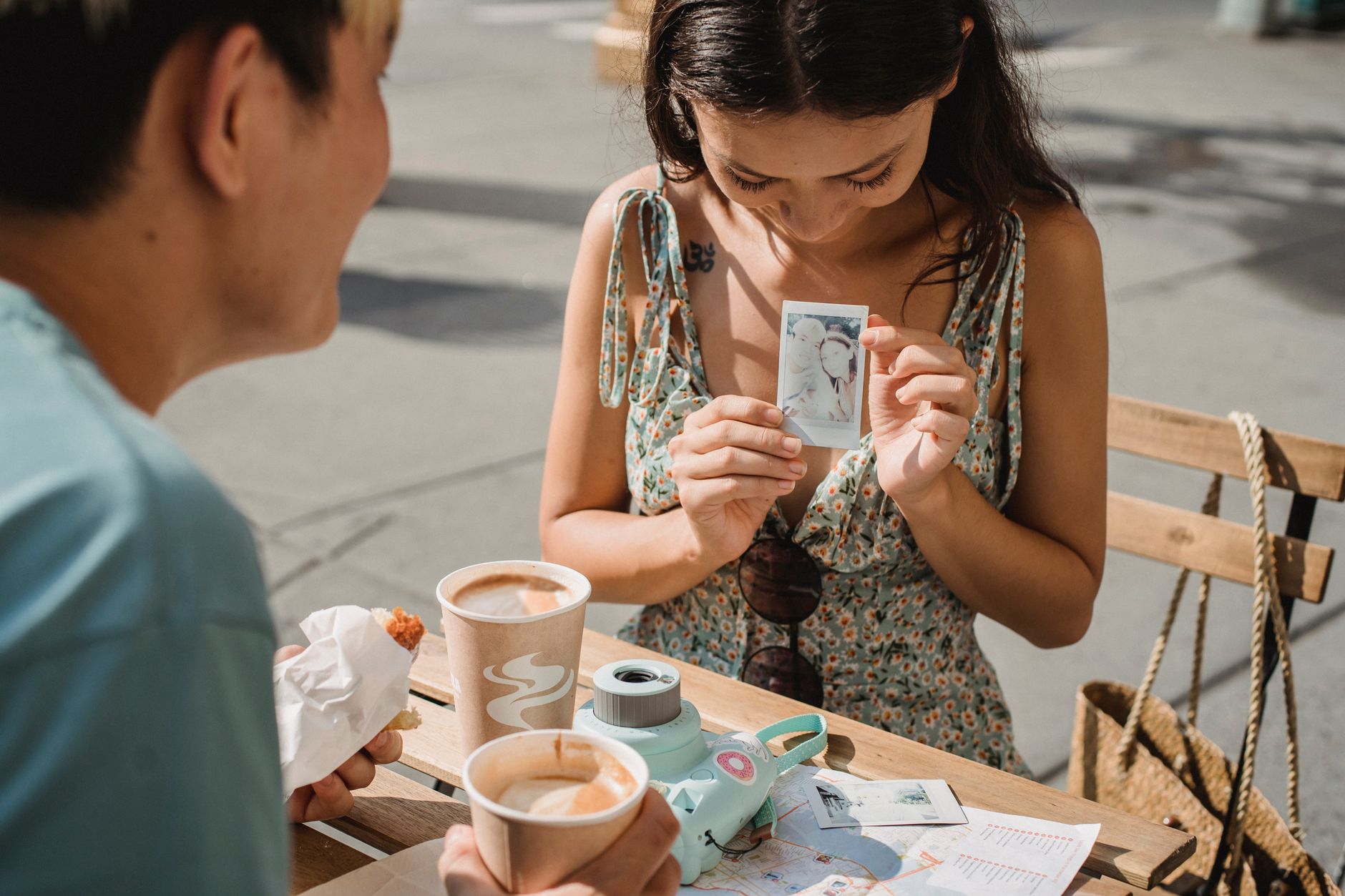
Instant cameras print on the spot. Disposable film cameras still need developing, scans and shipping, paid per camera.Photo by Samson Katt on Pexels
The practical answer
Budget for developing, scans and shipping, not just the camera
Expect to pay $5.99 to $18 for developing alone and from $12 to $25 per camera once you add digital scans, before any prints or shipping that are not included. Mail-in labs often return negatives and usually take one to three weeks in total, including post. For an event with ten table cameras, developing can cost as much as the cameras did, so price both together before you buy, and check each lab's current price list on the day you order.
01
What you are actually paying for
A disposable camera is a roll of 35mm film inside a plastic body. Most are loaded with colour negative film, which labs process with a standard chemical process called C-41. "Developing" in everyday speech usually means three separate services, and labs price them separately:
Processing: the chemical development of the film. This turns the exposed roll into negatives. On its own, it does not give you anything you can look at on a phone.
Scanning: the lab scans each negative and sends you digital files, usually through a download link. This is what most people want today, and it is often the biggest add-on.
Prints: physical photos made from the negatives, usually 4x6. Some labs charge per print, others per set.
Shipping: if you use a mail-in lab, you pay to send the camera, get the negatives back, or both, unless the lab includes postage.
Negatives: some labs return them cut and sleeved, sometimes for free. Ask before you order if you want to reprint or rescan later.
Cost parts
What makes up the price per camera
Each part is optional except processing. Most people want processing plus scans.
Processing
Develops the film into negatives.
Scans
Digital files you can download and share.
Prints
Physical photos, priced per print or per set.
Shipping
Included at some mail-in labs, extra at others.
Editorial summary based on the lab price pages cited in this article.
02
What it costs to develop a disposable camera at four labs
We read the published price pages of four labs that develop disposable cameras by mail on October 19, 2026. These are examples, not a ranking, and prices change, so check the lab's own page before you send anything.
Lists disposable camera developing at $5.99. Scans are $8.99 per roll on their own, or $4.99 per roll when ordered with prints. 4x6 prints are 49 cents each for the first set. Negatives are always returned. The page does not list shipping prices, so add your own postage to send the camera.
Old School Photo Lab
Lists develop only, with negatives returned, at $18, and a bundle of developing, scanning and round-trip shipping at $25 all-in. A prepaid, trackable label is emailed after checkout. Colour (C-41) turnaround is given as 4 to 5 business days after the lab receives the camera.
The Darkroom
Its disposable camera page says "starting at just $17", with a prepaid shipping label free at checkout. Scans come in Standard, Enhanced and Super tiers, and prints are optional; the page does not list the upgrade prices, which appear during ordering. Negatives are returned. Lab processing is 2 to 4 days after receipt, and mail takes 2 to 5 days to reach the lab from most of the US.
Icon (Los Angeles)
Lists two service levels for 35mm and disposable film. The cheaper "Value" level is $9.50 for processing only and $12 to $26 for processing plus scans, with a 6 to 10 business day turnaround. The "Standard" level costs more ($10 for processing, $20 to $41 with scans) and turns around in 2 business days. Shipping costs are not listed, and its prepaid bulk mail label has no tracking.
Checked October 19, 2026
Develop + scan, per disposable camera
Lowest published price for processing with digital scans at each lab. Shipping is noted where included.
Icon, Value tier (from, shipping extra)$12
Process One ($5.99 + $8.99 scans, shipping extra)$14.98
The Darkroom (from, prepaid label included)$17
Old School Photo Lab (round-trip shipping included)$25
From each lab's published price page on October 19, 2026. Upgrades, prints and tax are extra. Prices change; check before ordering.
03
What about drugstores and big-box stores?
Many people's first thought is the photo counter at a pharmacy or supermarket. Some still accept disposable cameras, usually by sending them to an outside lab, but services have changed a lot in recent years and the online price pages are often missing or out of date. We could not confirm current published prices for these stores on the day we checked, so we have not listed numbers for them.
If a local store is the easiest option for you, call or ask at the counter before you hand over the camera. Four questions cover what matters:
What is the total price per camera, and does it include digital scans or only prints?
How are scans delivered: a download link, a CD, or not at all?
Do I get my negatives back?
How long will it take, and is the film sent away to another lab?
04
What pushes the price up
The base price is the smallest part of the bill for a lot of orders. These are the add-ons that make the biggest difference.
Higher-resolution scans. Every lab above offers more than one scan size, and the larger tiers cost more. Standard scans are fine for phones and social media; larger scans only matter if you plan to print big.
Prints on top of scans. At 49 cents a print, a full 27-exposure camera adds about $13 in prints at Process One. Many people order scans only and print their favourites later.
Shipping. A prepaid label saves money when you send one camera. If the lab charges postage, sending several cameras in one box usually costs less than mailing them separately.
Faster turnaround. Icon's faster Standard tier costs more than its Value tier for every option, and its rush options charge two or three times the total cost.
Black and white film. Some disposable cameras use black and white film, which Old School Photo Lab lists with a longer 7 to 10 day turnaround. Check the box before you buy.
05
How long it takes to get your photos back
Plan for one to three weeks from posting the camera to having digital files, depending on the lab. The lab's turnaround is usually counted in business days from the day it receives the camera, and it does not include the time in the post.
Using the published figures above: The Darkroom quotes 2 to 5 days in the mail plus 2 to 4 days in the lab. Old School Photo Lab quotes 4 to 5 business days for colour film after receipt. Icon's Value tier is 6 to 10 business days, and its untracked bulk mail label can take 5 to 21 days to arrive. If you want your photos back before a particular date, such as a thank-you card deadline, pick a lab with a tracked label and a short turnaround.
06
Worked example: ten table cameras at an event
Disposable cameras are popular at weddings and milestone parties because guests enjoy them and the results feel nostalgic. Here is what a common setup costs to develop: one camera on each of ten tables, each with 27 exposures, scans only. These figures use the published prices above and leave out the cameras themselves, sales tax and any postage the lab does not include.
Cheapest published scan option (Icon Value, from $12): about $120 for ten cameras, plus shipping, with a 6 to 10 business day turnaround.
Process One ($5.99 developing + $8.99 scans): about $150 for ten cameras, plus your postage to the lab.
The Darkroom (from $17, prepaid label): about $170 for ten cameras, before any scan upgrades.
Old School Photo Lab ($25 all-in): about $250 for ten cameras, including scans and round-trip shipping.
Add the cameras and the realistic yield
Now add what you pay for ten cameras at your local price. For many events, the cameras and the developing end up costing about the same, so the total is often double the developing figure.
Ten cameras with 27 exposures each give you up to 270 frames. Some will be blank, blurred, too dark, or taken by accident, especially in dim reception rooms, where a small built-in flash only lights subjects close to the camera. Some cameras may also go home in the wrong bag or never get finished. It is worth knowing that before you decide what the photos are for: they are great as a fun, imperfect extra, and less reliable as the only record of the day.
Ten cameras, scans only
Developing cost for a ten-table event
Photo
Frames
Up to 270
10 cameras x 27 exposures
Download
Developing + scans
$120-$250
Before cameras, tax and extra postage
Time
Wait
1-3 weeks
Post plus lab turnaround
Calculated from the lab prices cited in this article on October 19, 2026.
07
How to keep developing costs down
Buy one camera first, use it somewhere with similar light to your event, and develop it. One test roll tells you whether the camera suits the venue before you buy ten.
Order scans only. You can print your favourites later from the files, often for less.
Send all the cameras in one tracked parcel to one lab, and choose a lab whose label is free or included.
Choose the standard scan size unless you plan to print large.
Fewer, better-placed cameras can work better than one per table. A camera at the dessert table, one with the wedding party and one at the dance floor edge often gets more use than ten scattered ones.
Ask a friend to collect every camera at the end of the night, so none go home with guests.
08
The digital disposable camera alternative
If the goal is mainly to collect what guests see, rather than to get a film look, a digital version can cost less and arrives faster. Guests scan a QR code, take or upload photos in their phone's browser, and the photos wait in one place until a reveal time. There is nothing to buy per table, nothing to post and nothing to develop. The trade-off is that you lose the grain, the flash look and the physical object, which is a large part of the appeal for some couples.
Many hosts use both: a few disposable cameras as a table activity, plus a QR code so guests can add the photos they took on their phones. If you are comparing tools for that second part, look for no app or account for guests, a clear limit on how many photos each guest can add, host review before anyone else sees the photos, and a full-resolution download at the end.
Event Capsule works like a digital disposable camera. Guests scan your QR code, enter their name, and take or upload photos from their phone's browser with no app. Each guest gets a set number of photos, like a roll of film, and the gallery stays sealed until the reveal time you choose, so everyone sees the photos together, a bit like picking up prints. You can review uploads and hide any before the reveal, then download the full set as a ZIP. Photos are kept for 30 days after the reveal, so download them in that window.
Pricing is one payment per event, not per camera. For comparison with the ten-camera example, the Full Roll plan is US $24.99 for up to 100 guests with 25 photos each, and The Archive is US $55.99 for up to 250 guests with 30 photos each. Smaller plans start at US $4.99, and there is a free plan for up to 5 guests if you want to try the guest experience first.
How much does it cost to develop a disposable camera?
At the four mail-in labs we checked on October 19, 2026, processing alone started at $5.99 to $18, and processing with digital scans started at $12 to $25 per camera. Prints, larger scans, faster turnaround and postage not included by the lab all add to that.
Is it cheaper to get scans or prints?
Scans only is usually the cheaper way to get every photo. At Process One, for example, scans are $8.99 per roll on their own, while a full set of 27 prints at 49 cents each costs about $13. You can always print your favourites from the scans later.
How long does it take to develop a disposable camera?
Usually one to three weeks in total by mail. Labs quote their turnaround from the day they receive the camera, between 2 and 10 business days at the labs we checked, and mail adds a few days each way unless you get scans by download.
Do I get my negatives back?
It depends on the lab. Process One, Old School Photo Lab, The Darkroom and Icon all say they return negatives. If you use a store photo counter, ask before you hand the camera over.
Is postage included in the developing price?
Sometimes. Old School Photo Lab's $25 bundle includes round-trip shipping, and The Darkroom offers a free prepaid label to send the camera in. Process One and Icon do not list shipping on their price pages, so add your own postage. If you are developing several cameras, sending them in one box usually costs less than mailing each separately.
What is cheaper than developing disposable cameras for an event?
A digital disposable camera, where guests scan a QR code and add photos from their phones, avoids per-camera and developing costs. Event Capsule, for example, charges one price per event, such as US $24.99 for up to 100 guests on the Full Roll plan.
One QR code. No guest app.
Collect the moments your guests already capture
Create a private Event Capsule, choose when uploads open and when the gallery reveals, then let guests contribute from their phone browser.